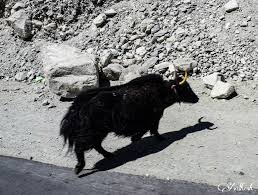
The Burdened Ones and the Luminous Way


[Encouraging us in making it a habit of reaching out and helping others in less fortunate circumstances than ourselves. This is really what matters. When we die, how many of these seeds of arising kindness in the mind, (antidote to our self-grasping (source of suffering), we plant as we go, that bring forth both this our current, and future good conditions for the mind. All phenomena outer and inner are experienced by the mind].

❤️


(🌾 A Dharma poem)

In a world where the dawn wore a veil of grey,
Walked the Burdened Ones, bent in the usual way.
Their backs were arched by invisible weight—
Desires and fears they mistook for fate.

They carried satchels of must be more,
Of I am lacking, I must restore.
Each craving a tether, each story a chain,
Each grasping thought a seed of pain.

They trudged through life with a beast’s dull tread,
Believing the voice in the back of their head
That whispered, “Protect what you think you are—
Your self is fragile, your peace is far.”

But high on a ridge where the sky grew wide,
A wanderer watched with a quiet stride.
His eyes held the stillness of unmoving flame,
And he called to the Burdened Ones each by name.

“Come rest,” he said, “and unbind your load.
You walk in circles on a straight, open road.
Your burdens are shadows you’ve mistaken for stone—
They vanish the moment they’re truly known.”

He lifted a weight marked Fear of loss,
And it blew away like a leaf across
A field where the wind had nothing to hold—
A truth too simple, too rarely told.

He held up another carved Need to be right,
And it dissolved in the warmth of the mountain light.
The Burdened Ones gasped as their packs grew thin—
A spaciousness rising from deep within.

“But how,” they asked, “did we come to believe
That these passing clouds were ours to grieve?”
The wanderer smiled with a tender grace,
“Relative truth is the dream you chase.
Ultimate truth is the sky behind—
Open, selfless, luminous mind.”

“Two truths,” he said, “are the loom of your days:
One weaves illusion, one burns it away.
One shows the world as a tangle of threads,
One shows the vastness where all of it spreads.”

The Burdened Ones stood with a trembling breath,
Feeling the life that had slept beneath death.
Their steps grew lighter, their hearts grew clear—
Not free from the world, but free within fear.

They walked back down to the valley floor
With eyes that saw both less and more:
Less of the self they had clung to tight,
More of the world in its shimmering light.

And slowly the valley began to change—
Not through decree or a grand exchange,
But through kindness offered without demand,
Through seeing each other as sky, not sand.

A new earth rose where the old one stood,
Not perfect, but rooted in basic good.
A place where compassion arose not a rule,
But the natural warmth of a mind in heart school.

And though burdens returned, as burdens will,
They met them with spaciousness, soft and still.
For they knew at last what the wanderer meant:
That awakening isn’t an accident—

It’s remembering the truth that was always there:
The beast was a dream, the burden (cleared) space-air.

A New Earth (Engaging with Enlightened Awareness Within)

Human beings “behaving like beasts of burden” is one of the oldest metaphors in Tibetan Buddha‑Dharma for how ignorance, craving, and clinging make us carry loads that were never ours, (in other words, this arises through habitually engaging in mistaken misidentification attachment). The following will consider three interwoven strands:

  1. How samsaric conditioning makes humans act in ways that obscure their awakened nature,
  2. How an enlightened society would look if awareness guided action,
  3. How the Two Truths explain this tension between delusion and awakening.

1. How humans become “beasts of burden” in Dharma terms

The image appears in many Mahāyāna and Vajrayāna commentaries: beings bent under the weight of their own mental afflictions, driven by impulses they mistake for freedom.

The burdens we carry

  • Attachment to bodily desires — pleasure, comfort, stimulation, status, appearance. These become reins that pull us around.
  • Attachment to mental desires — identity, opinions, narratives, self‑importance, being right, being seen.
  • Habitual reactivity — anger, fear, craving, jealousy, pride. These become the yoke.

In Tibetan terms, this is the activity of kleshas (nyon mongs) and karma (las). The mind that is not yet awakened to the true nature of reality follows karmic- (action of: body, speech and mind) patterns of cause, conditions and effect. *This is why engaging as early in one’s life in meditative action and meditation is such a foundational habit to develop). The tragedy is not that humans are sinful (negative) or flawed, but that they forget their nature and live as if they were pack animals driven by instinct.


Components of Mind

(A subsequent article will look at the components of mind: aggregates, elements and afflictive emotions (- which is why the wheel of suffering through the six mental states of delusion continues to turn since beginningless time until the present). A result of awareness not recognising its true empty-aware nature, until meeting with the favourable conditions for understanding and engaging in an awareness path to awakening. A human rebirth with its precious freedoms and endowments is one such condition, and to have the immeasurable blessed fortune of meeting with the dharma- study and practice of science of reality another.

Why this happens

  • Ignorance (avidyā / ma rig pa): the root confusion that mistakes the constructed self for something solid.
  • Dualistic fixation: “I must protect me from others.”
  • Cultural conditioning: societies built on competition, scarcity, and fear reinforce the illusion.

From this perspective, humans aren’t “bad”; they are asleep, carrying loads they don’t realise they can put down.

In today’s world in this human realm, (which is a desire realm) engaging further in over stimulation-attachment which arises from the mistaken belief in the inherent existence of a permanent, unchanging self, which is merely an imputed label placed on body and mind. This label is the source of intense self-clinging (outer and inner in the mind), when mind is not introduced to, and schooled otherwise in awareness. The intense clinging leads to fighting and dispute). The creation of non-dual reality (relative/ conventional level self-clinging experience in the mind, different to the true nature of nondual reality.

2. What enlightened action and an awakened society look like

Tibetan Dharma often describes an enlightened society not as utopian perfection but as a collective shift in perception.

Features of an awakened society

  • Interdependence recognised as fact, not philosophy People act knowing that harming another harms oneself.
  • Compassion as the default motivation Not sentimental compassion, but the fierce clarity of bodhicitta. (Engaging in practices of the awakening mind for the benefit of self and other, realising that ignorance (unawareness) and self-clinging attachment is the root of suffering and continued rebirth in cyclic existence).
  • Ethics arising from awareness, not rules When the mind is clear, harmful actions naturally fall away. Ethics are there to remind us of our shared humanity with one-another; which is why we now have the opportunity we do. All sentient beings have seen our mother/ father in one life-form or the other since time without beginning, (time is a human concept).
  • Collective humility A society that knows it is learning, not performing enlightenment.

This is close to what others in this age have termed a “new earth”: not a new planet, but a new way of seeing the one we already inhabit. The earth and all phenomena is actually spiritual in nature.

What enlightened action looks like in daily life

  • Responding rather than reacting.
  • Acting from spaciousness (and connected awareness) rather than fear. For example taking care of the natural law of phenomena in one’s indoor room and generating qualities to benefit others with active practice of loving-kindness, compassion and awareness wisdom arising from this ongoing warmness cultivation inside. Happiness is cultivated from inside the mind.
  • Seeing others as subjects, not objects. An opportunity to engage in an awareness vehicle of practice, (cutting mistaken attachment to self-clinging as we go, (as transmigrators, through this life).
  • Letting go of the need to win, dominate, or defend a fixed identity. The object is to wake up. Claim one’s inner awareness as we go and overcome one’s inner negative self-clinging attachments.
  • Choosing generosity over accumulation. This antidotes our self-clinging load of repeated rebirth in samsara (suffering).

This is not passive. It is active non‑harm, active clarity, active compassion.

3. The Two Truths: why humans appear deluded yet are already free

The above question points to the heart of Madhyamaka and Dzogchen: the tension between relative truth and ultimate truth. The ultimate truth however is to be realised . First through introduction, seeds of this recognition planted in the mindstream, then through further familiarisation and practice (habituation) in a consistent vehicle of awareness practice leading to a direct perception of the true nature of reality.

Relative truth (kun rdzob bden pa)

This is the world of:

  • duality
  • cause and effect
  • emotions
  • identities
  • social structures
  • suffering and confusion

On this level, humans do behave like beasts of burden because they believe the burdens are real, solid, and personal.

Ultimate truth (don dam bden pa)

This is the world of:

  • emptiness (śūnyatā)
  • selflessness (anātman)
  • nondual awareness
  • luminous clarity (rigpa)
  • the inseparability of appearance and emptiness

On this level, there is no burden, no carrier, no one to be enslaved, and no one to be liberated.

How the Two Truths work together

  • On the relative level, we practise ethics, meditation, compassion, and wisdom.
  • On the ultimate level, we recognise that the one who practises is empty, the practice is empty, and the result is empty.

This is not nihilism. It is freedom.

The Two Truths explain why:

  • humans seem trapped,
  • yet their nature is already free.

4. Bringing it together: why we fall into delusion and how we rise from it

The human condition in Tibetan Dharma is a paradox:

  • We behave like beasts of burden because we forget our nature.
  • We can create an enlightened society because our nature was never lost.

The path is not about becoming something new; it is about remembering.

The shift from burdened to awakened being

  • From grasping → to spaciousness
  • From self‑fixation → to interdependence
  • From reactivity → to awareness
  • From survival mode → to compassionate presence
  • From duality → to nondual clarity

This is the movement from samsara to nirvana, which are not two places but two ways of perceiving the same reality.

5. A question to deepen your own exploration

When you look at your own experience, where do you most clearly feel the “beast of burden” conditioning — and where do you already sense the luminous, unburdened nature shining through?